
MAYSAN — Within the mountainous villages of Maysan Governorate, aged residents recall recollections of Ramadan within the Nineteen Thirties when the beginning of the holy month was confirmed solely by the bare eye.
Sharifah bint Atiyah Al-Thaqafi, almost a century outdated and a resident of Lykah village within the Thaqif Heart, recounted that lengthy earlier than trendy know-how and unified official bulletins, the arrival of Ramadan was decided by direct visible sighting of the crescent moon.
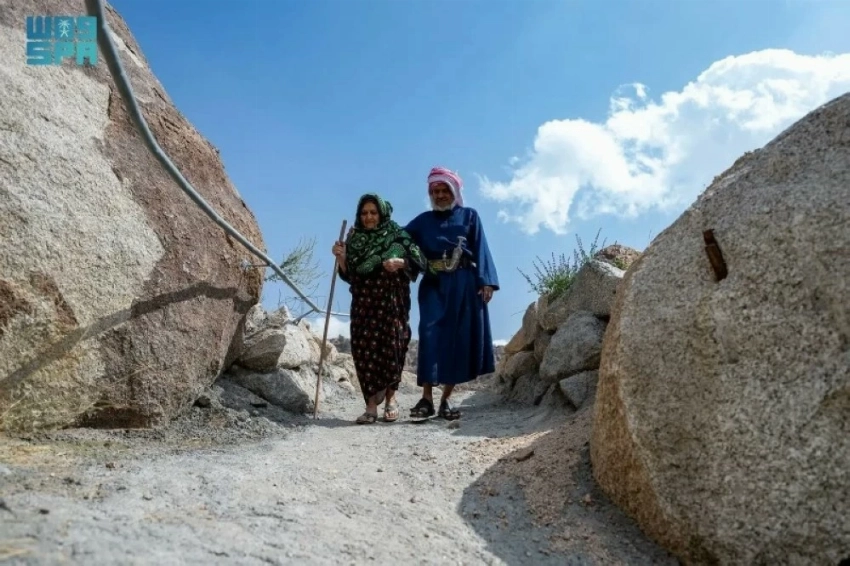
Chatting with the Saudi Press Company throughout a go to to her village, Al-Thaqafi stated that as sundown approached, males and their kids would climb close by elevations, together with the peaks of the Shahdan Mountains, scanning the horizon for the primary glimpse of the moon. Ladies remained at house making ready iftar and suhoor whereas awaiting affirmation in an environment marked by quiet supplication.
As soon as the crescent was sighted, celebrations echoed throughout the villages. Residents exchanged congratulations, lit firewood atop mountain summits and chanted takbir and poetry to relay the information to neighboring communities.
Associated Article

Third Makkah Halal Discussion board concludes with signing of 15 strategic cooperation agreements
The traditions, she stated, mirrored a powerful social cloth rooted in cooperation and shared expertise. The sighting of the crescent prolonged past a non secular observance to turn out to be a unifying second that set the rhythm for household gatherings, nightly prayers and communal iftar and suhoor meals all through Ramadan.
Right this moment, strategies for observing the crescent have developed. Madis Al-Thaqafi, spokesperson for the Majardah Thaqif Astronomical Observatory, stated that reliance on direct visible sighting has regularly been complemented by astronomical telescopes, digital imaging and specialised computational instruments that present better precision in monitoring the moon’s formation.
Regardless of these advances, elders’ recollections in Maysan stay a residing document of a time when non secular follow was deeply interwoven with every day life.
The custom of crescent sighting continues to represent continuity between generations, linking current practices with longstanding customs that formed the group’s collective id in welcoming the holy month.