
RIYADH — The skies over Saudi Arabia witnessed Monday evening the conjunction of the Pleiades star cluster with the Moon, an astronomical occasion often known as the “Seventh Qiran.”
The phenomenon is thought to be a seasonal marker signaling the start of spring and accompanying climatic modifications that contribute to soil fertility.
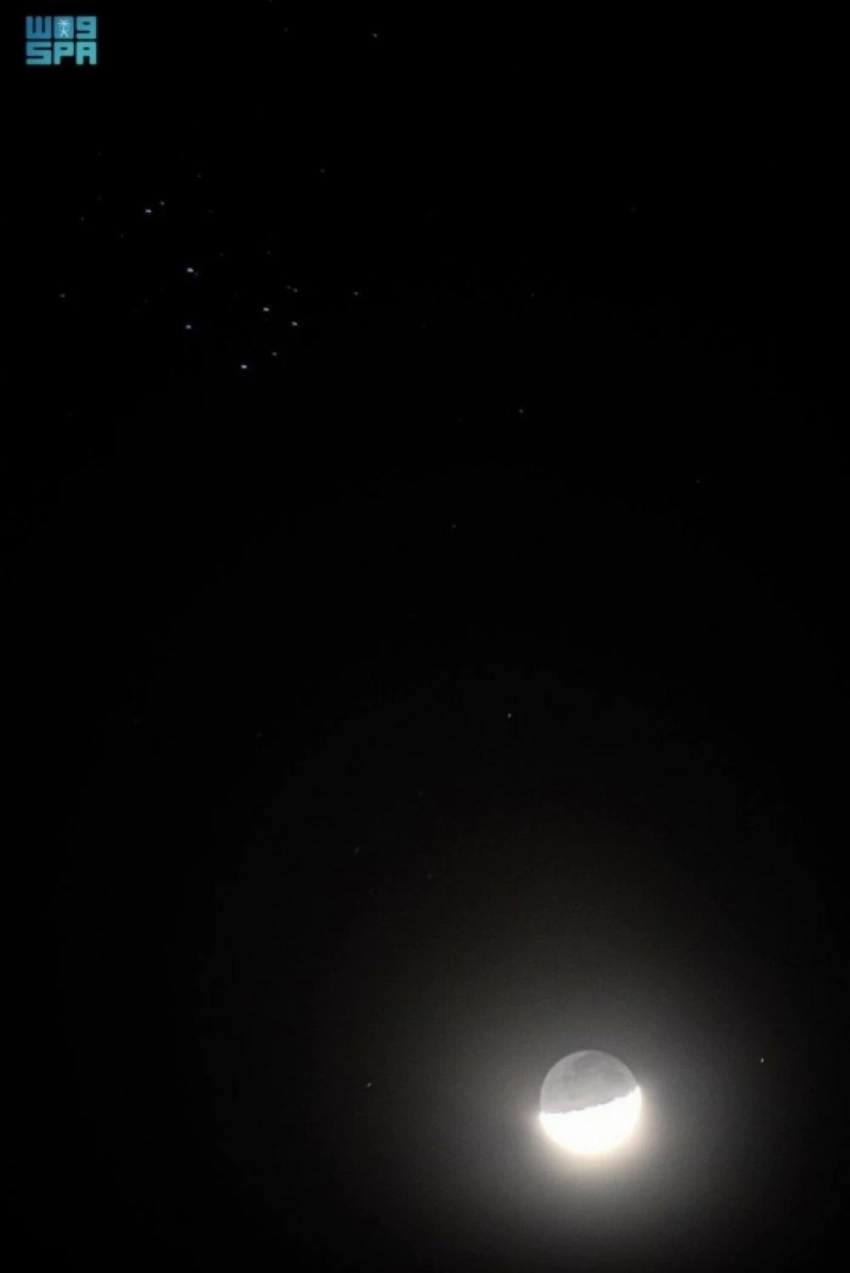
Mohammed Al-Hazimi, a member of the Astronomy and Area Membership, mentioned that in fashionable heritage the conjunction is known as “Majee’ wa Shabee’,” a time period related to bettering climate situations and the onset of milder temperatures.
Associated Article

Saudi Arabia boosts world date output with 400 varieties, 8.1m palm timber
He added that the Qiran lasts roughly 27 days, throughout which noticeable climate shifts happen, contributing to the sprouting of untamed vegetation and the flourishing of vegetation.
The interval can be linked to the emergence of “faq‘,” or desert truffles, in a number of areas of the Kingdom.
In historical instances, Arabs relied on such conjunctions to determine seasonal transitions.
The occasion continues to attract curiosity from astronomy fans and people involved with cultural heritage.